
August 17, 2026 |
From retirement towns to Gurugram: Why senior living is moving into India’s big cities
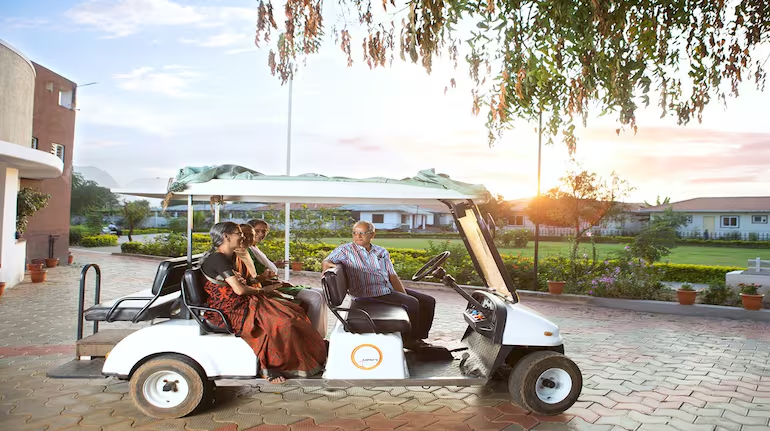
India’s senior-living market is beginning to move out of traditional retirement destinations to major cities, as a wealthier and more active generation of retirees looks for independent living without giving up proximity to family, healthcare, social networks and urban amenities.
That changing idea of retirement is beginning to reshape the real estate market. Gurugram and Noida are emerging as beneficiaries of the shift, attracting specialist senior-living operators as well as mainstream real estate developers looking to tap a category that was once largely associated with quieter retirement destinations such as Dehradun, Coimbatore and Puducherry.
“Today’s seniors do not wish to distance themselves from society; instead, they wish to reinvent themselves,” said Archana Sharma, senior consultant–psychology at Sri Balaji Action Medical Institute, Delhi.
Industry experts said today’s retirees are healthier, financially more independent and increasingly unwilling to view retirement as a withdrawal from professional or social life. Many continue to work as consultants, entrepreneurs, mentors, advisers or investors and want housing that allows them to remain connected with the city while providing the security and healthcare support associated with senior living.
That is changing the product itself. Senior living is increasingly being positioned as a combination of residential real estate, healthcare, hospitality, security and community management rather than simply housing designed for the elderly.
Sharma said the growth of nuclear families has also changed expectations around care after retirement.
“Most of today’s seniors know how hectic the lives of their children are and they do not see them as an answer to any of their needs or as the centre of their retirements. They want to find societies where they can create new connections, stimulate their mind and feel included,” she said.
The potential market is sizeable. According to Mordor Intelligence, India’s senior-living market was estimated at $3.55 billion in 2025 and is projected to reach $14.14 billion by 2031, representing a compound annual growth rate of 25.92 percent.
Why Gurugram is emerging as a hub
For developers, Gurugram offers a combination that traditional retirement destinations cannot easily replicate — a large population of affluent professionals approaching retirement, premium housing, a well-developed private healthcare ecosystem, social infrastructure and connectivity to Delhi, Noida and the international airport.
According to data from the department of town and country planning (DTCP), around 22 licences have been issued for senior-living developments over the past four years, of which about six projects have already been launched.
The numbers point to developers beginning to treat senior living as a more mainstream residential category rather than a niche retirement product.
Developers including Ashiana Housing, Antara and Pioneer Urban have expanded their presence in the segment. DLF has also announced plans to enter senior living with a luxury project in Sector 63 on Gurugram’s Golf Course Extension Road, with an estimated revenue potential of around Rs 2,000 crore.
A premium urban residential product
The entry of large mainstream developers is significant because senior housing in India has traditionally been dominated by specialist operators and projects in smaller cities or retirement destinations. Industry experts said rising land values in metropolitan markets also mean developers need sufficient demand from affluent buyers willing to pay a premium for specialised services.
Rishabh Periwal, senior vice president at Pioneer Urban Land & Infrastructure, said the new generation of senior citizens increasingly sees retirement as an extension of an active lifestyle rather than a withdrawal from it.
“Many of them are entrepreneurs, mentors, consultants and advisors who wish to remain connected with the city’s ecosystem while enjoying premium healthcare, hospitality and community living. Metro cities naturally fulfil these aspirations because they provide world-class infrastructure, connectivity and healthcare facilities,” Periwal said.
Healthcare is emerging as one of the most important factors determining where such communities are located.
Access to multi-speciality hospitals, emergency services, preventive healthcare and wellness facilities is increasingly influencing where seniors choose to live, industry experts said. This gives large cities such as Gurugram an advantage, particularly for residents who are capable of living independently but want medical facilities and emergency care close at hand as they grow older.
The other major consideration is proximity to family.
As children increasingly live separately from their parents or move overseas for work, experts said many retirees want to maintain their independence without moving hundreds of kilometres away from their families and established social networks.
An urban senior-living development can offer a middle ground — allowing residents to live independently in a professionally managed community while remaining close to children, grandchildren, friends, hospitals and other parts of their existing lives.
Samir Jasuja, Founder and CEO of PropEquity, said the senior-living real estate segment is consequently emerging as an established asset class, particularly in Delhi-NCR.
“This is mainly because of what it provides — a unique blend of quality healthcare services, metro connections, social infrastructure, and the presence of a sizeable number of wealthy retirees and soon-to-be-retirees,” Jasuja said.
NRI demand for professionally managed senior communities is also emerging as a driver, according to Jasuja. For Indians living overseas, such projects can offer an alternative for ageing parents who want to continue living independently while having access to healthcare, security, maintenance and other support services.
The shift also changes the economics of senior housing for developers.
Instead of building retirement communities primarily on relatively inexpensive land outside major cities, developers can increasingly position senior living as a premium urban residential product aimed at households with both the willingness and financial ability to pay for specialised services.
But senior living is also more complex than conventional residential development.
Unlike a regular housing project, the proposition does not end with construction and sale of apartments. Developers and operators have to provide or facilitate healthcare, emergency response systems, security, food and housekeeping services, accessible design, recreational facilities and sustained community management.
Industry experts said the ability to maintain these services over the long term will ultimately determine whether senior living can develop into a large residential category. Simply designing conventional apartments differently and marketing them to older buyers is unlikely to be sufficient.
For developers, the opportunity is therefore tied to a much broader demographic and social change.
As affluent Indians live longer, remain professionally and socially active after retirement and increasingly seek independence from their children, retirement is becoming less about leaving the city for a quieter destination.
Instead, for a growing section of India’s affluent elderly population, the new retirement address could increasingly be within the city itself.
Source:Moneycontrol
Related Articles
Experion Sector 88A Gurgaon: Luxury 3 & 4 BHK Homes Near Dwarka Expressway
Gurgaon has become one of the top residential locations in the Delhi NCR, providing advanced infrastructure, job opportunities and upscale […]
Cocoa County Sector 88A: 5 Things Buyers Should Know Before Booking
Cocoa County Sector 88A has become one of the new residential address in New Gurgaon and is targeted at attracting […]
Signature Global enters Gurugram West with 194-acre farmhouse villa project with GDV of ₹6,000-crore
Gurugram-based Signature Global on September 25 announced its entry into Gurugram West, or Farrukhnagar, with plans to develop a 194.22-acre […]